
How to clean a washing machine
To clean a washing machine, run an empty hot cleaning cycle with a washer-cleaner tablet or the cleaner your manual recommends, then wipe the door gasket, the detergent dispenser, and the drain pump filter. Most manufacturers say to do this about once a month, or every 30 to 40 washes.
If the washer still smells after a full clean, or water sits in the drum, the drain path is usually the cause, not dirt.
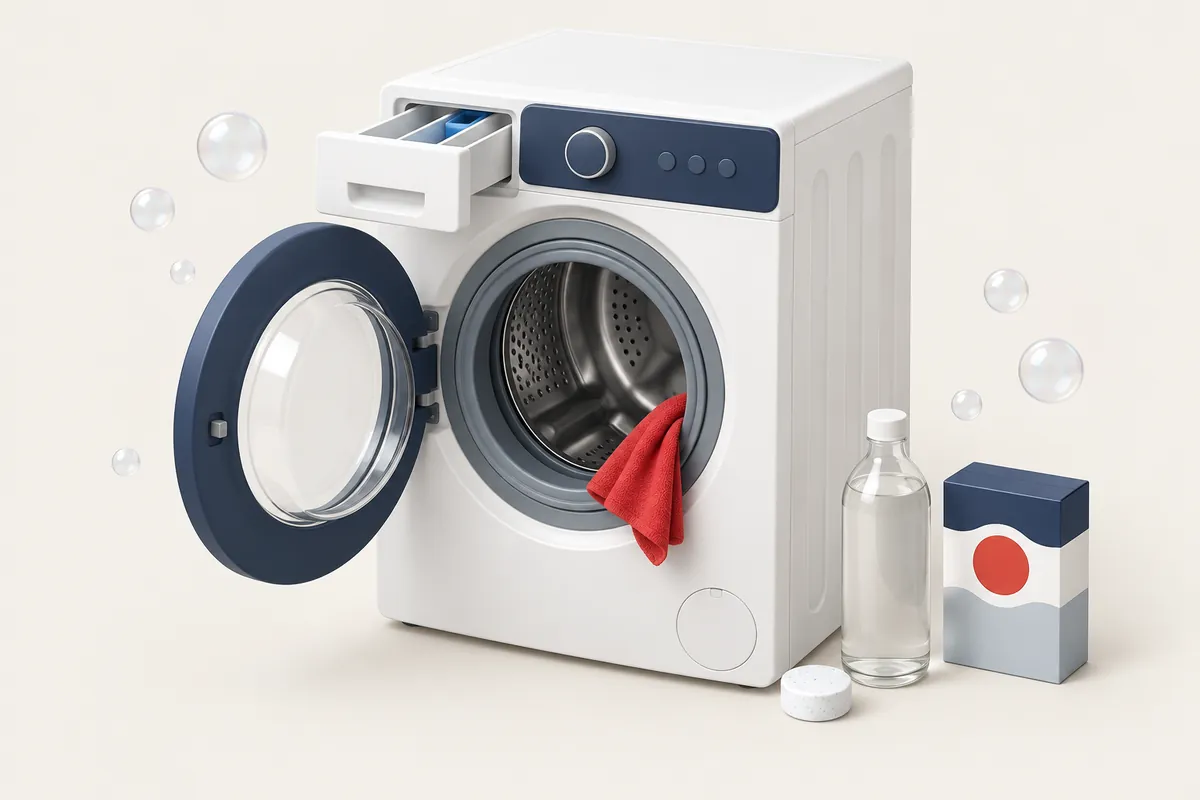
How to clean a front-load washing machine
A monthly clean that takes about ten minutes of hands-on time.
Empty the drum and run the washer's clean cycle (Tub Clean, Pure Cycle, or Clean Washer) with a washer-cleaner tablet. With no clean cycle, use the hottest normal cycle.
Pull back the door gasket and wipe out lint, hair, and black residue with warm soapy water. Dry it.
Remove the detergent dispenser drawer, rinse it under warm water, and wipe the opening.
Put a towel and a shallow tray down, open the small panel at the bottom front, drain the hose, and clean the drain pump filter.
Wipe the outside and leave the door and dispenser open to dry.
How often should you clean a washing machine?
Follow the schedule for your brand. Whirlpool recommends a clean cycle every 30 days. LG says to run Tub Clean every 30 washes, or when tcL shows on the display. Samsung says to run the self-clean cycle about every 40 washes and to clean the drain pump filter on front-loaders monthly or every 40 washes, whichever comes first.
If you mostly wash in cold water or use a lot of detergent or softener, clean it more often. Those are the habits that cause residue and smell.
How to clean a top-load washing machine
Run the clean cycle or the hottest, largest cycle with a washer-cleaner tablet. Wipe under the rim and lid, where residue collects out of sight. On agitator models, lift out the fabric softener cup and clean under it.
Many top-loaders have no user filter. If water sits after the cycle or the washer smells of sewage, the drain hose or pump is the next check.
Can you clean a washing machine with vinegar?
Many people do, but check your manual first. Some manufacturers prefer their own cleaner and warn that strong vinegar or bleach can wear rubber seals over time, and some front-load models should not use bleach at all. Never mix vinegar and bleach. Together they release a toxic gas.
A washer-cleaner tablet in the clean cycle is the simplest option and is what most manuals list.
When a dirty washer is really a repair
Call a technician if water stays in the drum after the cycle, the washer smells like sewage after a full clean, the drain filter is clear but it still will not drain, or the door gasket has torn. A blocked drain pump, a kinked hose, or a failed pump will keep the smell coming back however often you clean it.
We clear drain pumps and hoses and replace door gaskets on all major brands across the GTA. Call 416-800-9206.
When to call
Frequently asked questions
Keep reading
All postsTroubleshooting
Common dryer problems
Is your dryer tumbling but the clothes still come out damp? Many homeowners in Toronto and the GTA notice it after a second cycle that should have been enough.
Updated Nov 24, 2026Read
Troubleshooting
Reasons why a fridge is not cold enough
Has the milk started spoiling a few days early, even though the fridge is still running? A warm fridge is a food-safety problem.
Updated Sep 5, 2026Read
Troubleshooting
Fridge and freezer door seal: test, fix, or replace
A fridge door seal, also called the gasket, is the rubber strip around the door that keeps cold air in.
Updated Nov 24, 2026Read
Need help with an appliance today?
Call us or send the form. Our team books evenings and weekends across Toronto and the GTA.